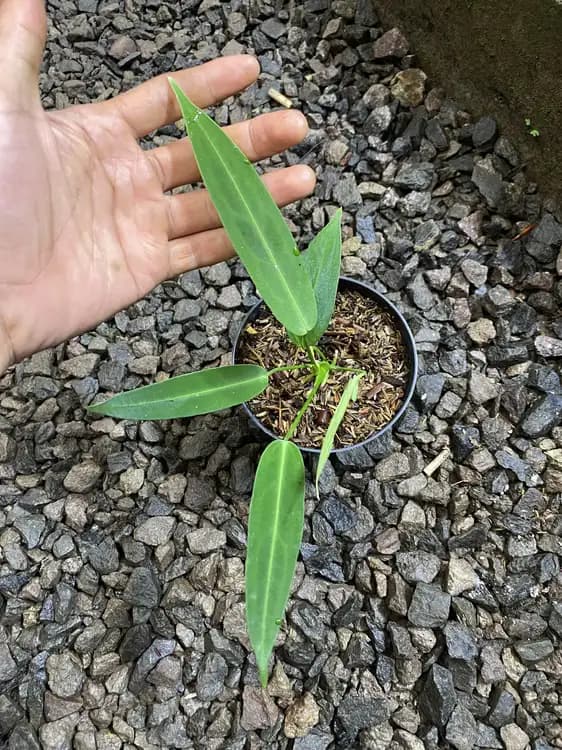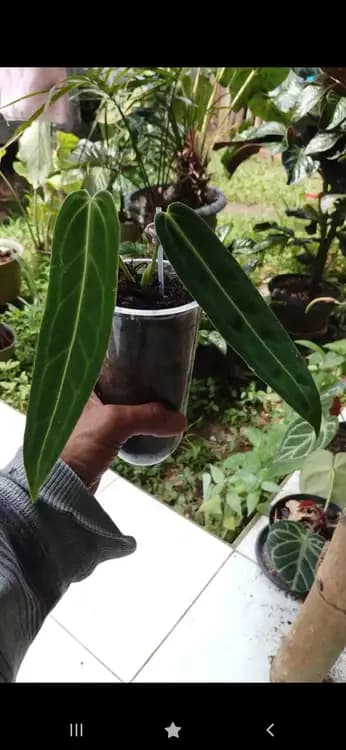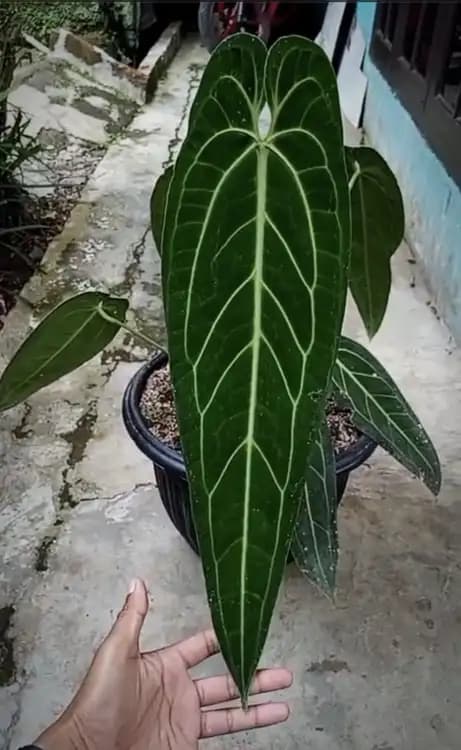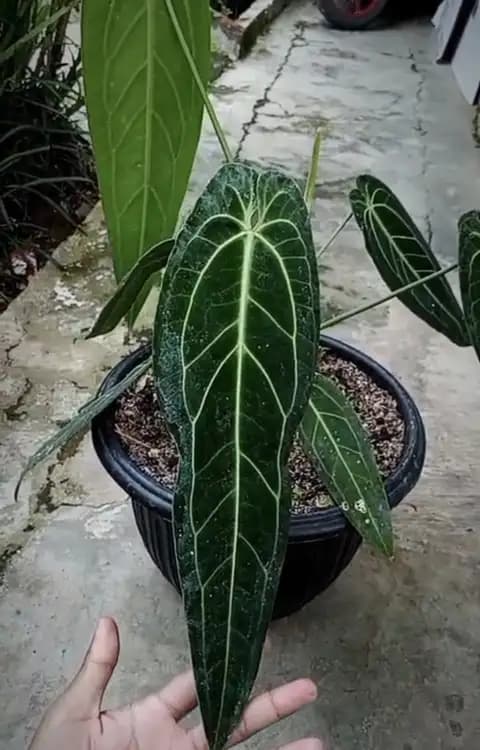

Anthurium warocqueanum Care: Growing the Queen Anthurium
By Inflos Team · Updated 19 September 2026 · 2 min read
Light, humidity, watering, substrate, mounting and common problems for Anthurium warocqueanum, plus what to look for when buying one and how to acclimate an imported plant.
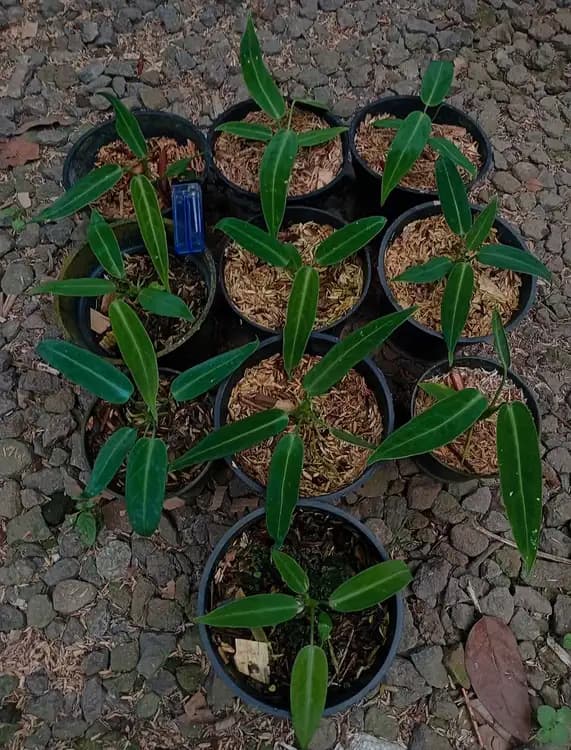
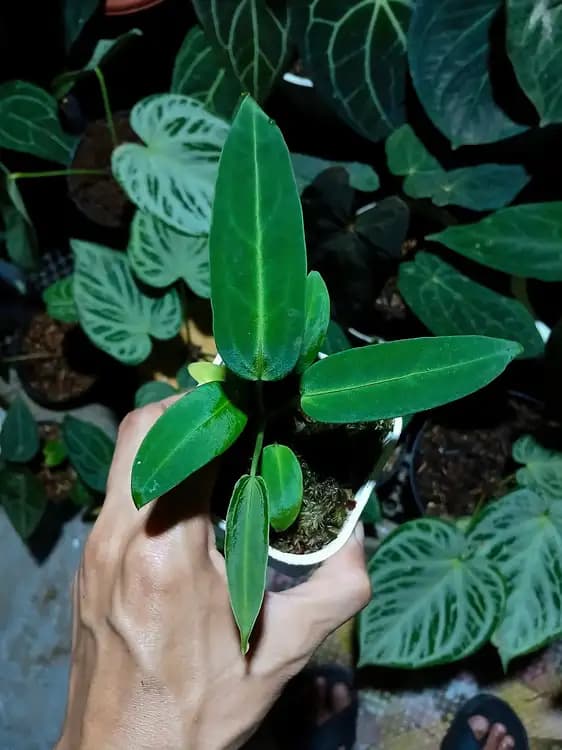
Anthurium warocqueanum, the Queen Anthurium, is the plant most collectors picture when they hear "velvet leaf": long, narrow, dark-green blades with pale veins and a matte sheen. It is native to the cloud forests of Colombia, which explains most of what follows.
Light
Bright, indirect light. An east-facing window, a shaded balcony or a grow light at moderate distance all work. Direct afternoon sun scorches the leaf between the veins. Too little light produces thin, floppy leaves.
Humidity
This is the deciding factor. Warocqueanum wants 70 percent humidity or higher and sulks below 60. In dry rooms, use a cabinet, a humidifier or a grow tent. Good airflow inside the enclosure prevents fungal spots.
Watering
Keep the substrate lightly moist and never soggy. Water when the top few centimetres feel dry, then let the excess drain fully. Rainwater or filtered water is kinder to the velvet surface than hard tap water.
Substrate and potting
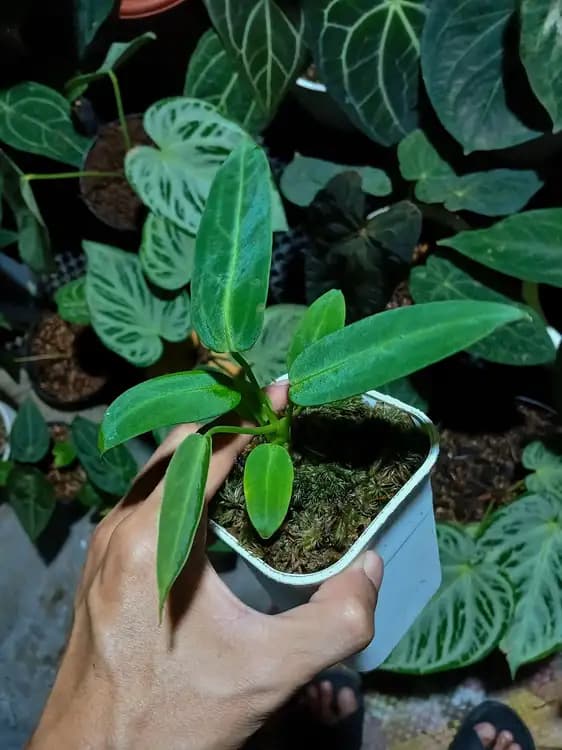
Use a chunky, airy aroid mix: orchid bark, perlite or pumice, a little coco chips and sphagnum. Many growers succeed in pure sphagnum moss in a net pot. The plant is a climber, so give it a moss pole or mount it once it has several leaves. Repot only when roots fill the container.
Feeding
A balanced, diluted fertiliser every two to four weeks in the growing season. Skip feeding for the first month after import or repotting.
Common problems
| Symptom | Likely cause | Fix | | --- | --- | --- | | Brown, crispy leaf edges | Low humidity or salt build-up | Raise humidity; flush the pot | | Yellow lower leaves | Overwatering, poor drainage | Airier mix, water less often | | Leaves fold or curl | Too much light or heat | Move to softer light | | Black spots that spread | Bacterial blight in stagnant air | Remove affected leaves, add airflow |
Buying a warocqueanum
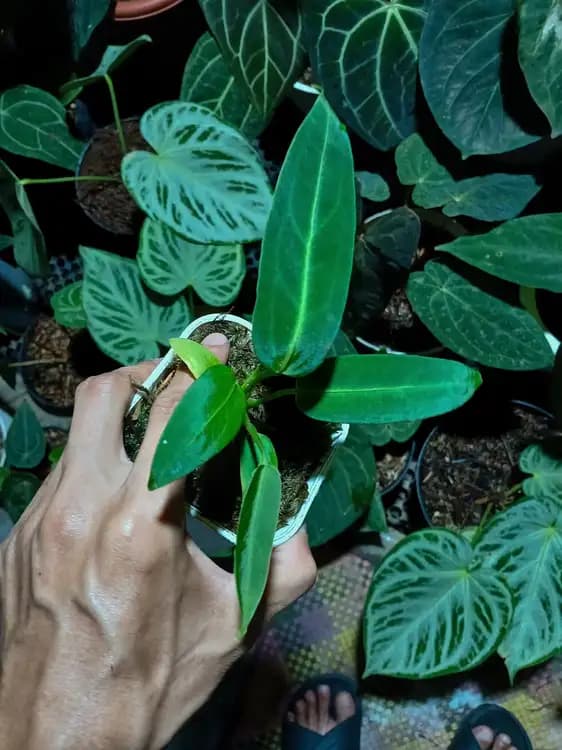
Look for firm roots, at least two healthy leaves and a visible growth point. Seed-grown plants vary in leaf shape and darkness; dark, narrow forms are the most sought after. Imported plants ship bare-root and typically drop an older leaf while rooting in, so judge the plant on its roots and newest leaf, not its oldest.
Acclimating an imported plant
Pot into moist sphagnum or a light mix, keep it in high humidity and gentle light for two to three weeks, and do not fertilise until you see new roots or a new leaf. Read how to import plants from Indonesia for the paperwork side.
Shop
Browse Anthurium warocqueanum listings from verified growers, or all Anthuriums for sale.
Frequently asked questions
Why are the new leaves on my warocqueanum smaller than the old ones?
Usually a humidity or root problem. The plant makes smaller leaves when it cannot support larger ones. Raise humidity to 70 percent or more and check that the roots are firm and the mix is airy.
Is Anthurium warocqueanum a beginner plant?
No. It is one of the more demanding velvet anthuriums because of its humidity needs. If you are new to the genus, start with Anthurium crystallinum or clarinervium and move to warocqueanum once you can hold humidity steadily.
How big does it get?
Mature leaves can exceed one metre in length on a well-grown plant, though most indoor specimens settle around 40 to 70 centimetres.
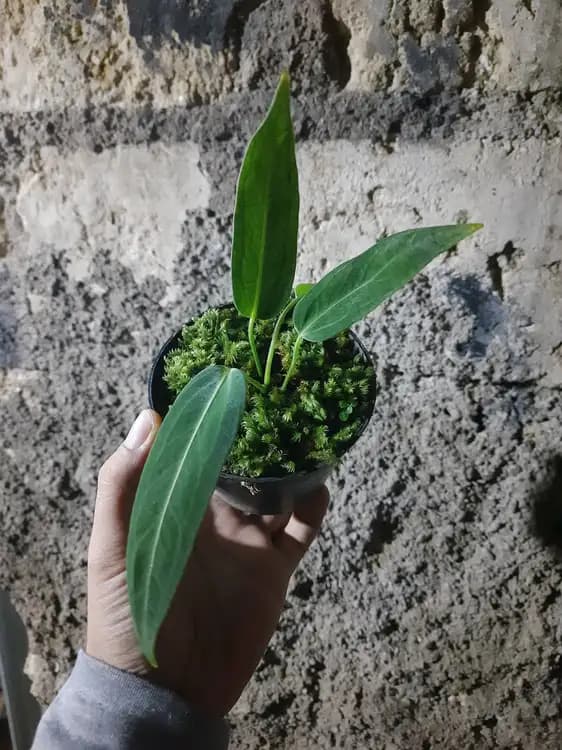
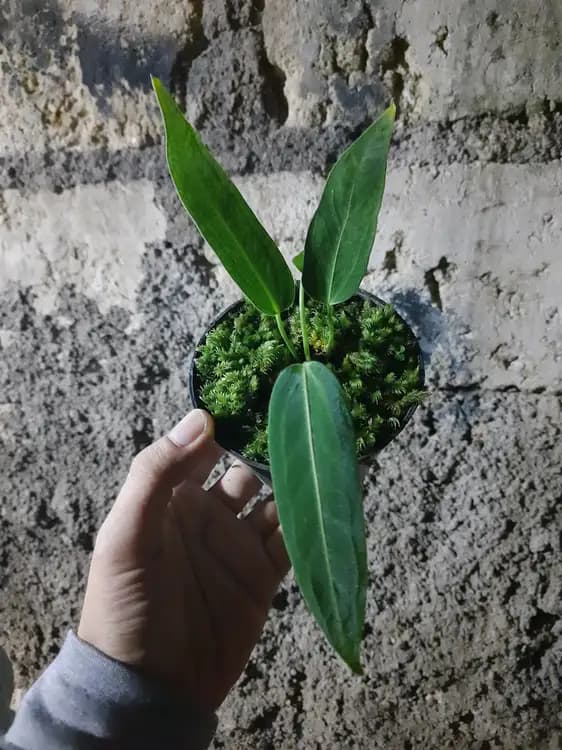

 Anthurium Warocqueanum